Amazon’s new Sidewalk feature is going live on June 8. Announced all the way back in 2019, Amazon Sidewalk is an ambitious project that aims to create a shared network of connected devices. Amazon has been testing the feature for some time now, but it finally appears to be ready for its prime-time launch.
As part of the rollout, Amazon will enroll millions of supported Amazon devices in the U.S. into Sidewalk to form a mesh network. To form this mesh, Amazon will share a fraction of your Internet bandwidth with your neighbors. Naturally, anything that involves sharing your home network with outsiders will trigger privacy and security concerns. And these concerns are further compounded by the fact that Amazon is making Sidewalk an opt-out service rather than opt-in.
In other words, Amazon won’t ask you whether you want to be part of this experiment. Instead, the company will just straight up enroll every supported device into Sidewalk starting June 8. But the good thing is that it’s possible to opt out of this initiative before it goes live. Before you go ahead and disable the feature, though, it’s worth reading about how it works so you can decide if it’s really a threat to your privacy.
How Sidewalk works
Conceptually, Amazon Sidewalk works similarly to Apple’s Find My network but with a bigger scope in mind. While Apple’s “Find My” service only helps locate AirTags and lost Apple devices, Amazon Sidewalk can do much more than that. For example, it can extend the working range of your connected devices beyond your home Wi-Fi, locate your pets and valuables, and more. Sidewalk employs Bluetooth Low Energy, the 900Hz band, and other frequencies to enable Echo speakers, Tile trackers, Ring security cameras, and other supported Amazon devices to communicate over a low-bandwidth network created using participating devices. Each participating device, referred to as Sidewalk Bridge, contributes a small portion of internet bandwidth. This bandwidth is pulled together to create a shared network that supported devices can use to help each other out.
Amazon says the maximum bandwidth of a Sidewalk device to the Sidewalk server is 80Kbps, while the monthly bandwidth per account is capped at 500MB. In response to privacy concerns, Amazon says all communications over Sidewalk Bridges are secured by three layers of encryption. Amazon also limits the amount and type of metadata it collects from participating devices to protect user privacy. And although users can see they’re connected to Sidewalk, they can’t see exactly which Bridge they’re connected to. For a detailed explanation of the various mechanisms employed by Amazon to protect the privacy and security of Sidewalk users, check out this whitepaper.
How to opt out of Amazon Sidewalk
If you don’t want to be a participant in Amazon’s Sidewalk network, you can opt-out of the experiment using the Alexa app or Ring app.
In the Alexa app, open the “More” tab > tap Settings > Account Settings > Amazon Sidewalk > and turn off the toggle.
In the Ring app, open the hamburger menu > Control Center > Sidewalk > toggle off the slider.
Apple doesn’t make too many products, so if you’ve already decided on getting a Mac, you’re halfway towards buying the thing you want. Now you just have to decide which Mac you’re going to get. Steve Jobs famously divided the Mac lineup into four quadrants. There’s laptop and desktop, and for each one, there’s consumer and professional. After returning to Apple, he asked the team which one he should tell his friends to buy, and that’s when it was decided that things should be simpler.
With some exceptions, not much has changed. In the procategory, there’s the MacBook Pro laptop and the Mac Pro desktop. For consumers, we have the MacBook Air and the iMac. Of course, we can throw the Mac mini in there too.
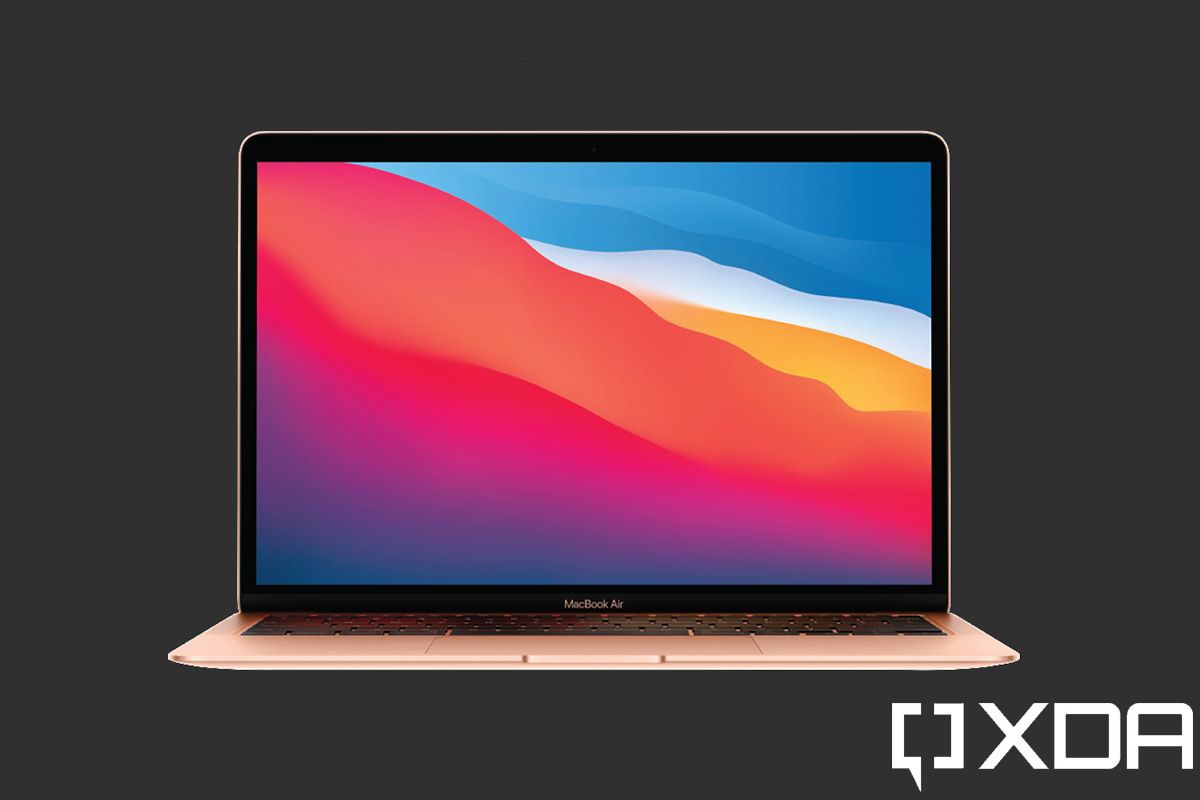
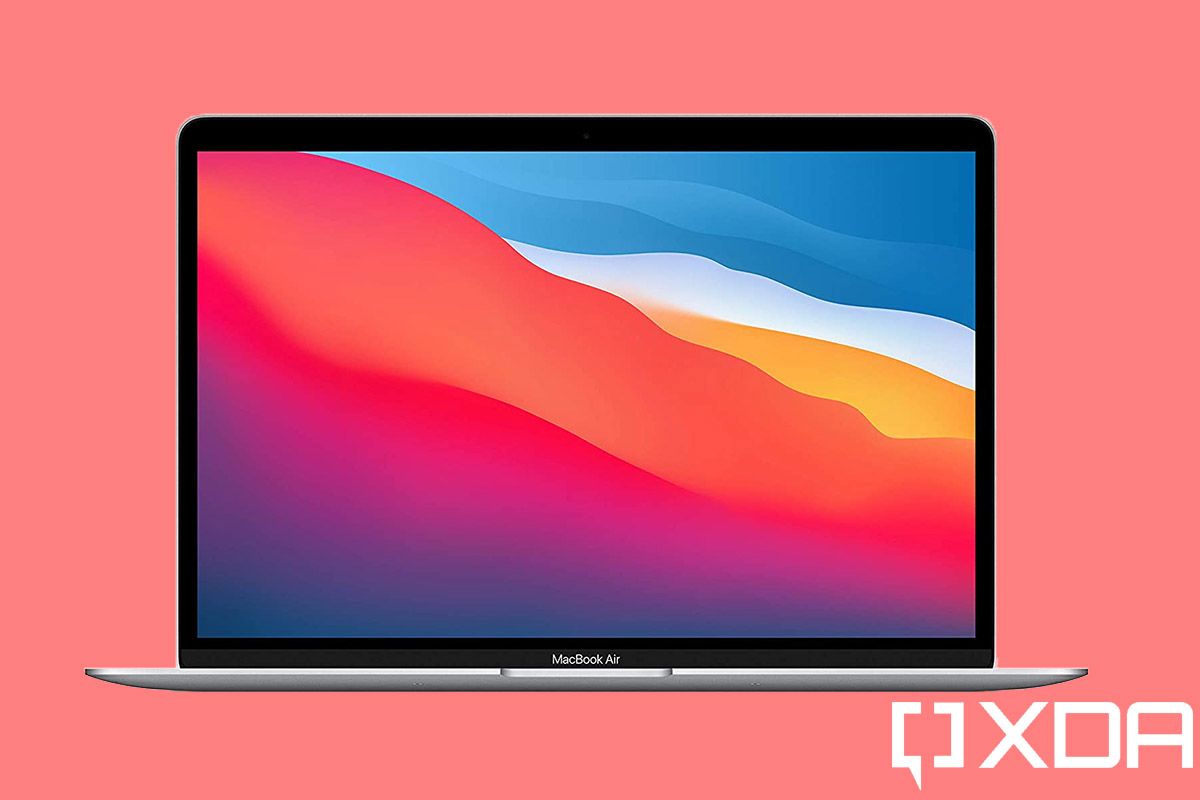
The MacBook Air is one of the first to use Apple Silicon, and the M1 processor is a beast. Not only does that make this one of the best Macs around, but it’s also one of the best laptops around. It comes with a beautiful 13.3-inch 2560 x 1600 display, Thunderbolt 3, and Touch ID.
Along with 8GB unified memory and a 256GB SSD, all of that comes in at $999. Seriously, with performance like that, a display like that, Thunderbolt, and a fingerprint sensor, you’re just not going to find anything on this level in the Windows world at that price. It comes in Gold, Silver, and Space Gray.
When I was considering what to make the best overall pick, I really wanted to make it the 24-inch iMac. The truth is that for most people, a desktop PC just doesn’t fit into their lifestyle. But if you want a mainstream desktop PC, this is the one for you.
It’s the first Mac that’s actually designed with Apple Silicon in mind. Others like the MacBook Air, 13-inch MacBook Pro, and Mac mini all used the chassis of their Intel-powered predecessors. The iMac looks impossibly thin and incredibly beautiful, also coming in six stunning colors, and silver. Starting at $1,299, it also comes with a stunning 24-inch 4.5K Retina display.
It’s got the same M1 processor as the MacBook Air. Indeed, we live in a world where the 11-inch iPad Pro and the 24-inch iMac use the same processor, and the iMac is still desirable. The Apple M1 is that good.
While the Apple M1 is included in the 11-inch iPad Pro, the Mac mini is actually the least expensive way to get your hands on the company’s custom silicon at $699. This is another one of those situations where the value is just incredible if you want to be sticking within the Apple ecosystem. You’re not going to get this level of performance with an Intel PC for $1,699.
On a side note, the Mac mini is the only Apple Silicon Mac that supports dual monitors. You can connect one to the USB Type-C port and one to the HDMI port. What’s cool is that it doesn’t take up a lot of space either. You can easily customize your setup, something that’s not as easy to do with an all-in-one.
Apple's Mac mini is only small in size, not performance. It doesn't take up a lot of space, and it's the least expensive way to get an Apple Silicon Mac.
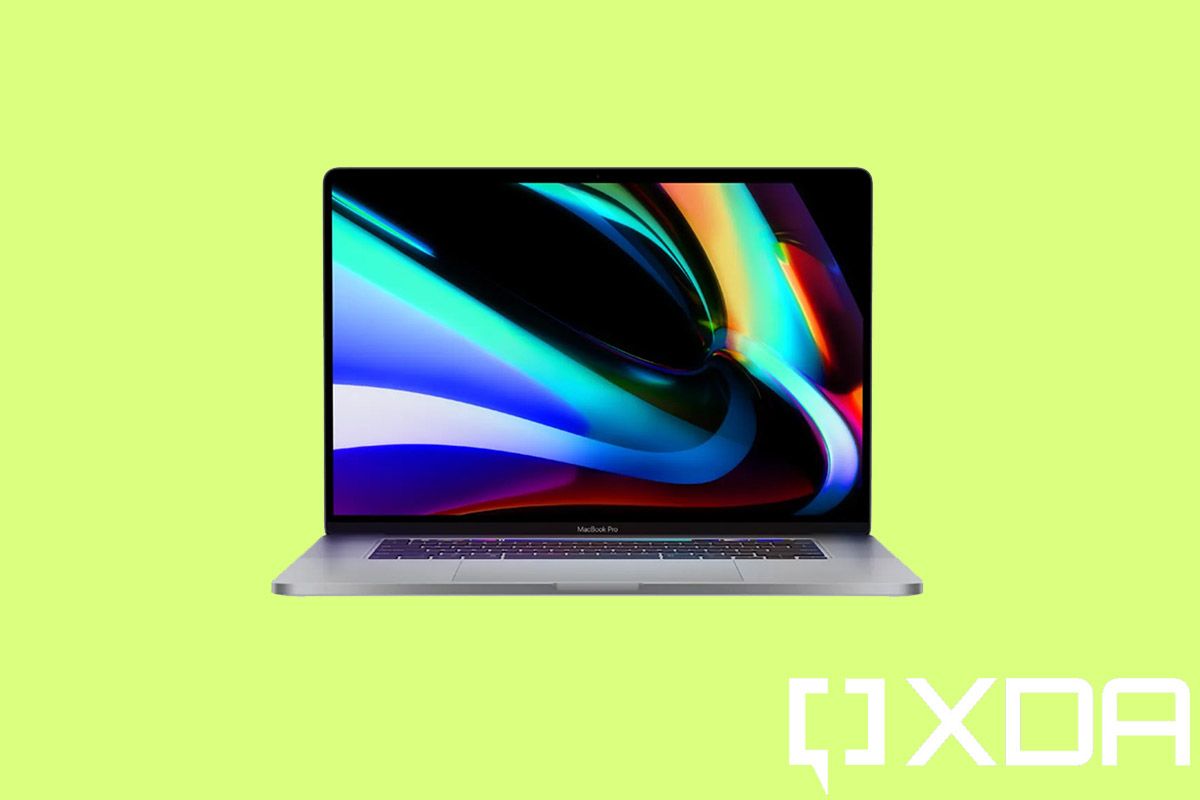
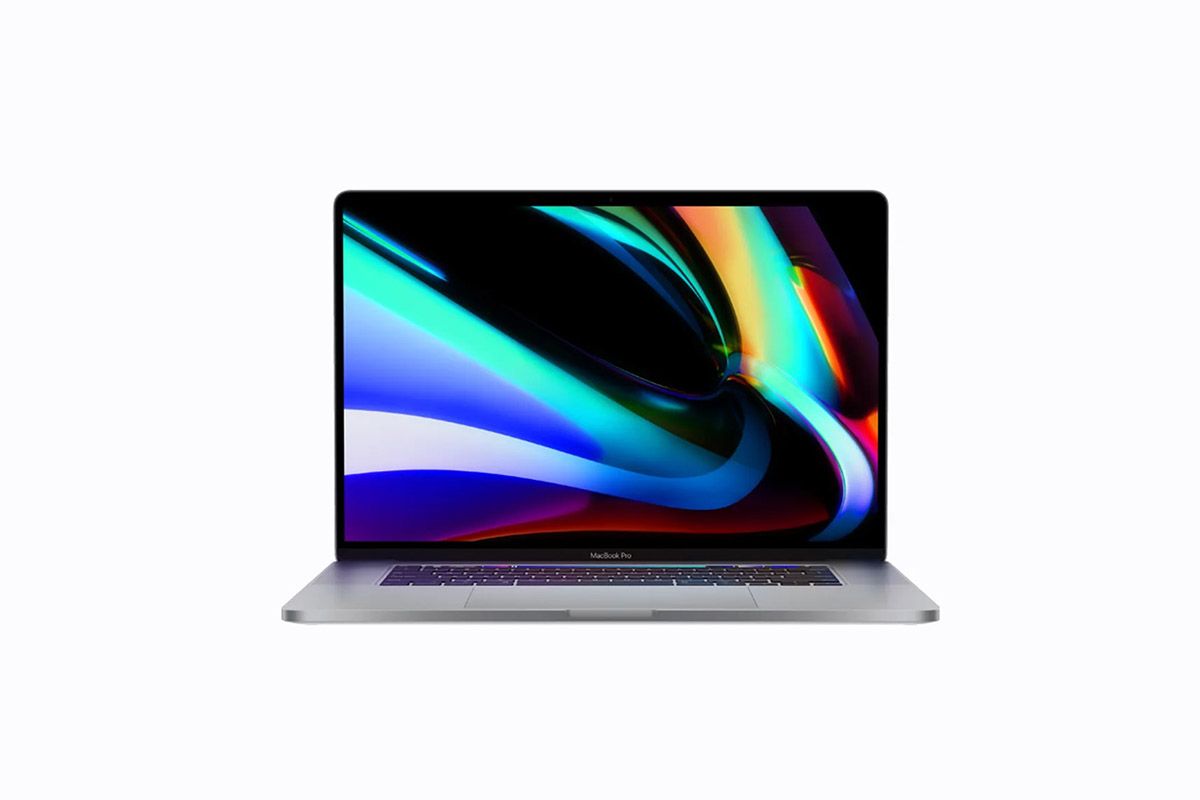
The 16-inch MacBook Pro is still the best Mac for creators, despite not yet having been refreshed with Apple Silicon. But since it still has a 45W Intel CPU, it can do some things that the M1 can’t. A single Thunderbolt port is capable of powering dual 4K displays, and the laptop itself can handle up to four 4K displays. Or it can handle two 6K displays. Another thing you can do here that you can’t do with the M1 is you can connect an external GPU, adding more power.
Along with up to an Intel Core i9, you can get it with an AMD Radeon Pro 5500M with 8GB GDDR6 memory or a Radeon Pro 5600M with 8GB HBM2 memory. It also comes with up to 64GB 2,666MHz DDR4 memory and up to an 8TB SSD. It starts at $2,399.
Apple's 16-inch MacBook Pro is still the powerhouse laptop, and you can pack it out with 64GB RAM, 8TB of storage, an Intel Core i9, and Radeon Pro 5600M graphics with 8GB HBM2 memory
On the creator end, the 27-inch iMac is the way to go. If you’re doing things like video editing and photo editing, you’ll appreciate the bigger, 5K Retina screen than the one on the 24-inch iMac. It’s got 10th-generation 65W Intel processors, which are full desktop parts. You can configure it with up to 128GB 2,666MHz DDR4 memory and up to an 8TB SSD.
For graphics, you can get up to an AMD Radeon Pro 5700 XT with 16GB GDDR6 memory, so there’s lots of power here. External display support is one 6K display, or two 6K display if you get a Radeon Pro 5700 or 5700 XT, so you can do a lot with the 27-inch iMac. It starts at $1,799.
The 27-inch iMac has a bigger screen and more pixels than the smaller 24-inch one. It has 10th-gen Intel processors, up to Radeon Pro 5700 XT graphics with 16GB GDDR6, 8TB SSD, and 128GB of memory
My top pick is the MacBook Air. Out of the four products with the Apple M1 processor, that’s the one that works for most people. And at $999, you’re just getting things that you can’t get anywhere else. It has a beautiful display, tons of power, and more. If you’re looking for something that isn’t portable, that’s when you go for the 24-inch iMac. It comes in pretty colors, and it’s just a delight to use.
A couple of products were omitted here. For one thing, we didn’t include the 13-inch MacBook Pro with its M1 processor. Being a Pro-branded PC, there are a few trade-offs that need to be worked out in the next generation, such as support for multiple external monitors.
Then there’s the big bad Mac Pro. The Mac Pro has tons of power if you want it, but we’re going to wait for it to get its Apple Silicon refresh before we recommend it. A year ago, Apple said that it was transitioning its entire lineup to Apple Silicon over the next year. For something that starts at $5,999, you might want to wait for the new one, especially since we know it’s coming soon.
Lenovo’s ThinkPad X1 Nano is a phenomenal PC. I’ve already said as much when I compared it to the ThinkPad X1 Carbon. They’re both meant to be premium, thin and light laptops for businesses, but the ThinkPad X1 Nano is next-level thin and light. This is actually the second one that I’ve reviewed, as Lenovo was kind enough to send over the multi-touch model.
The ThinkPad X1 Nano weighs in at just 2.14 pounds. It’s the kind of thing that if you carry it in your backpack, you have to check and make sure that it’s in there. The best part is that doesn’t really make compromises to get that thin and light, as the Intel processors under the hood are really good.
It’s also the first 16:10 ThinkPad, something that was way more of a big deal in December when this was first announced. Then, CES came in January and 16:10 screens became more common for everyone.
13.0″ 2K (2160 x 1350) IPS, anti-reflective, anti-smudge, touchscreen with Dolby Vision, 450 nits, 100% sRGB
Memory
16GB LPDDR4x 4266MHz (Soldered)
Storage
512GB PCIe SSD
Battery
48WHr, up to 13 hours
Security
Discrete Trusted Platform Module (dTPM) 2.0
Human-presence detection with Windows Hello & IR camera
Match-on-chip fingerprint reader
Webcam privacy cover
Audio
Dolby Atmos Speaker System
4 x 360-degree mics
Camera
Hybrid infrared (IR) / 720p HD with webcam privacy cover
Connectivity
Optional: WWAN LTE 5G / LTE 4G CAT9
WLAN: WiFi 6 AX201 802.11AX (2 x 2)
Bluetooth 5.2
with vPro On vPro Processors
Ports
2 x USB4 Thunderbolt 4 (Power Delivery)
Headphone / mic combo
Keyboard
Spill-resistant
Backlit with white LED lighting
Call-control keys (F9-F11)
Material
Top: Carbon fiber
Bottom: Magnesium alloy
Color
Black with Carbon-Fiber Weave on the top cover
OS
Windows 10 Pro
Price
$1,315.85
The price I listed for the ThinkPad X1 Nano is based on the product page on Lenovo.com, but that price always fluctuates. Lenovo never actually charges what would be considered full-price on a ThinkPad, and the “instant savings” and eCoupons always vary.
Note that this model weighs in at 2.14 pounds. The non-touch model that I previously reviewed came in at 1.99 pounds, so it does make a difference between the touch and non-touch models. Adding cellular puts on a bit of weight as well.
Design: The ThinkPad X1 Nano weighs around two pounds, depending on your config
The ThinkPad X1 Nano comes in two colors: black, and another kind of black. Lenovo sent me the latter, which is actually a carbon fiber weave design. The carbon fiber weave is exclusive to the touchscreen model, so if you want the 1.99-pound non-touch version, you’ll have to get regular black.
There’s not a whole lot to talk about when it comes to the general design of a ThinkPad. It’s a pretty standard look and feel that stretches across most of the lineup. Indeed, almost all of them just come in black, and they all have those squared-off corners and a ThinkPad logo stamped in the corner. For premium models, there’s the glossy black ThinkPad logo that we see here.
I quite like the ThinkPad X1 Nano’s carbon fiber weave design, and obviously, I’ve seen it on a number of ThinkPads. It’s just something a little bit different. I’m a bit surprised that Lenovo reserved it for the touch model since I think the non-touch one is the more desirable configuration. That’s the one that actually comes in at under two pounds, a key feature of the ThinkPad X1 Nano.
This one is just over two pounds, which is still incredibly light. As I said, it’s the type of device where if you walk out of the house with the laptop in your backpack, you’ll have to check and make sure you remembered to put it in your bag. The ThinkPad X1 Nano is just that light that you won’t even be sure it’s in there.
The ThinkPad X1 Nano is the type of device where if you walk out of the house with it in your backpack, you'll have to check and make sure you remembered to actually put it in your bag.
On the right side, there’s just a power button. This is only interesting if you’re into ThinkPad design as Lenovo used to put a circular power button on the keyboard deck for clamshells like this. A couple of years ago, Lenovo moved the button to the side to make it consistent with its convertibles. This year for the ThinkPad X1 series, the company moved the button back to the deck, making it double as a fingerprint sensor. But being that this laptop was announced in December rather than alongside the rest of the lineup, the ThinkPad X1 Nano missed out on that memo. Expect to see that on Gen 2.
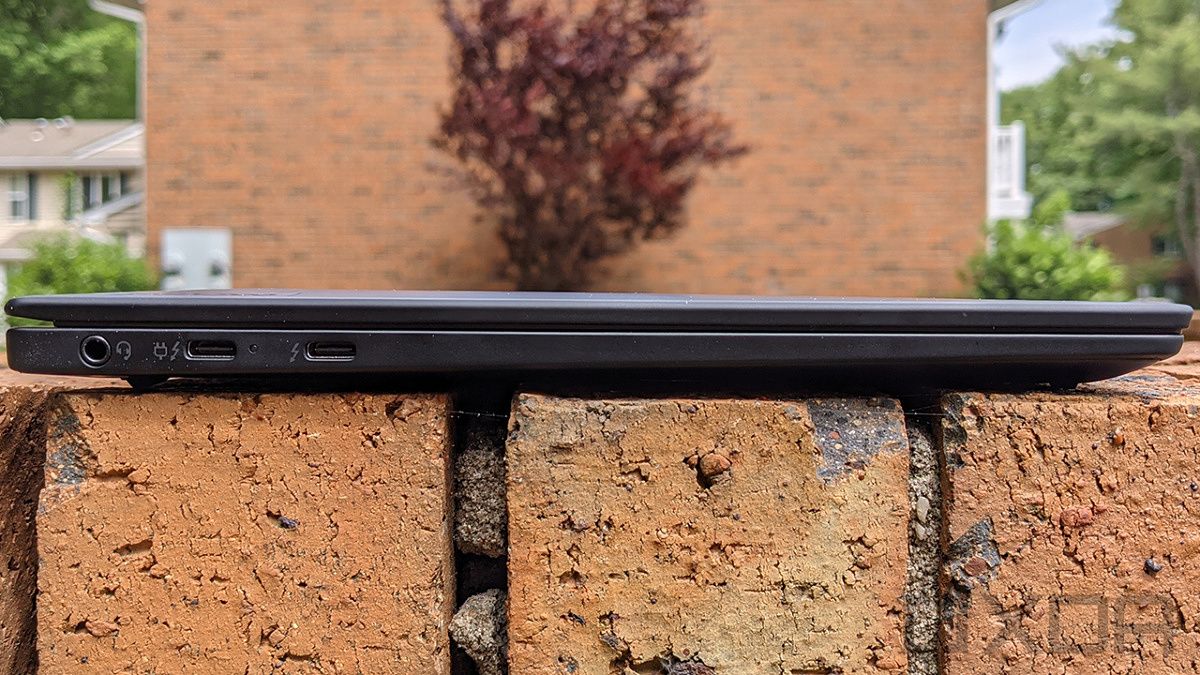
On the left side, there are two Thunderbolt 4 ports and a 3.5mm audio jack. If you need more ports than that, I suggest checking out the ThinkPad X1 Carbon. The two laptops fall under the umbrella of premium ThinkPads that are designed to be thin and light, but the Carbon maintains a lot of legacy support.
With Thunderbolt 4 support on the ThinkPad X1 Nano, you can connect dual 4K displays on a single port, or you can connect an external GPU. Here’s a better plan. You can connect an external GPU to one of the Thunderbolt ports, connect dual 4K displays to the external GPU, and then use the other Thunderbolt 4 port to connect a dock and add some ports. That’s what I actually did at one point, and I sat and played Forza Horizon 4 on Ultra graphics settings on a 2.14-pound laptop.
Display and Audio: It has a 2K screen and Dolby Atmos
The Lenovo ThinkPad X1 Nano doesn’t have a lot of display options like some more mature ThinkPads. You’ve pretty much got touch and non-touch. They both have 13-inch 2160 x 1350 450-nit panels that support Dolby Vision HDR. Aside from touch support, one key difference is that the non-touch model has an anti-glare screen while the multi-touch one has a glossy one.
The display has a 16:10 aspect ratio, and as I said earlier, the ThinkPad X1 Nano is the first modern ThinkPad to use the taller aspect ratio. Back in the old days, they had 4:3 aspect ratios, but then the industry moved to 16:9 when HD got popular. It’s always been generally accepted that taller screens are better for productivity, and we’re finally seeing the industry moving back in that direction.
The ThinkPad X1 Nano definitely has a pretty screen, and I really appreciate that it’s 2160 x 1350 in resolution instead of 1920 x 1200. Those extra pixels definitely make a difference. In my testing, it supports 99% sRGB, 72% NTSC, 77% Adobe RGB, and 77% DCI-P3.
I really appreciate that the ThinkPad X1 Nano has a 2160 x 1350 resolution screen. Those extra pixels definitely make a difference.
Sadly, the webcam is a bust. It’s only 720p in resolution, a real shame in the era of working from home. It does have a built-in privacy guard, so you don’t have to worry about putting tape over it or anything. I just wish Lenovo had packed a 1080p webcam. Fortunately, Lenovo did add an IR camera on the ThinkPad X1 Nano for Windows Hello support, so you do get built-in facial recognition.
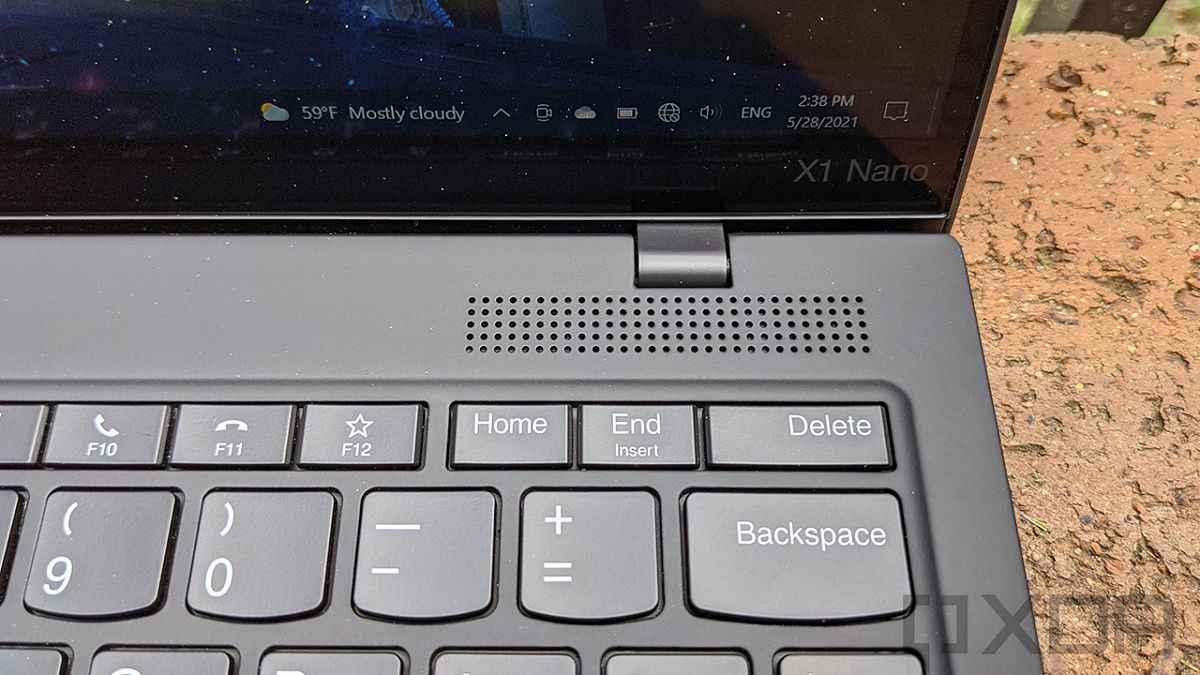
Finally, we’ve got Dolby Atmos audio on the ThinkPad X1 Nano, with two speakers above the keyboard and two underneath the device. It has the clarity that Dolby Atmos is known for, but the volume isn’t terrifically loud. It’s fine for music at your desk, but it won’t fill the room. It’s also great for calls, of course, especially with its four 360-degree microphones.
Keyboard: The ThinkPad X1 Nano has new 1.35mm keys
Lenovo’s ThinkPads are renowned for having some of the best keyboards, but what if I told you that this keyboard was different from the rest of the pack? Well, it is, and personally, I think it’s way better.
I think the X1 Nano's keyboard is way better than other ThinkPad keyboards.
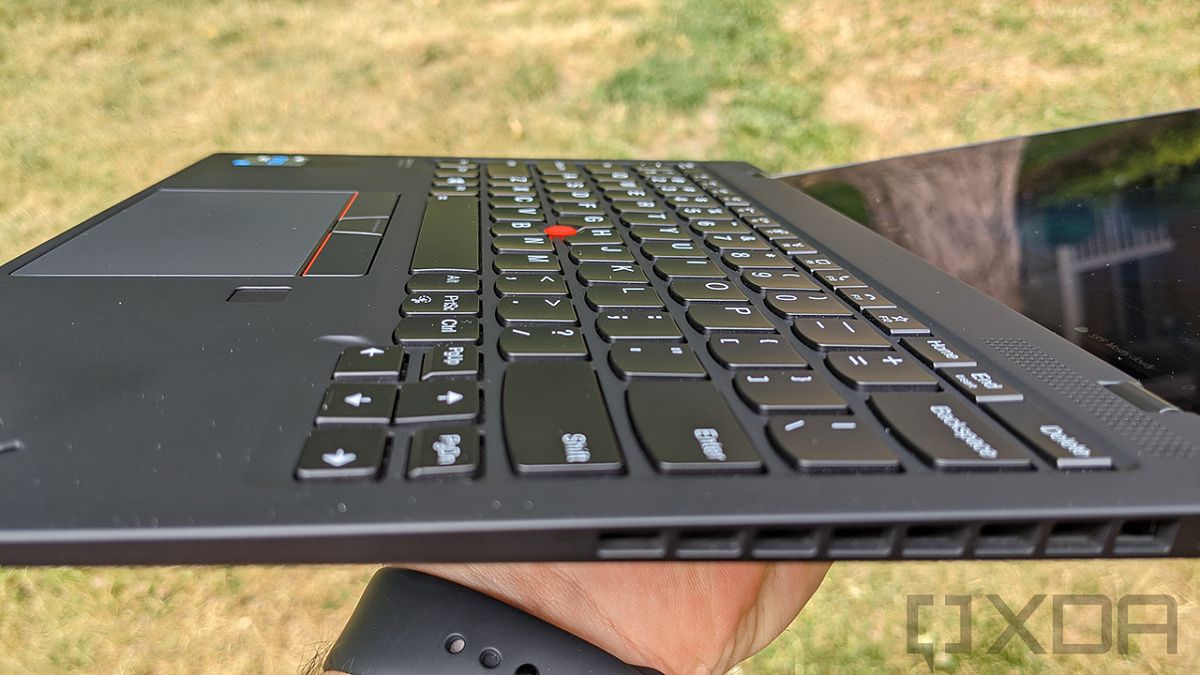
The ThinkPad X1 Nano has 1.35mm keys, rather than the 1.5mm keys that you’ll find on most ThinkPads. While Lenovo ThinkPads always had amazing keyboards in terms of comfort and accuracy, the key throw always felt a bit long, even though competing laptops have shallower keyboards.
It’s actually the same keyboard, but even shallower. There’s a lot of engineering that went into everything about this PC. Making the keyboard shallower without changing the feel was a big part of that.
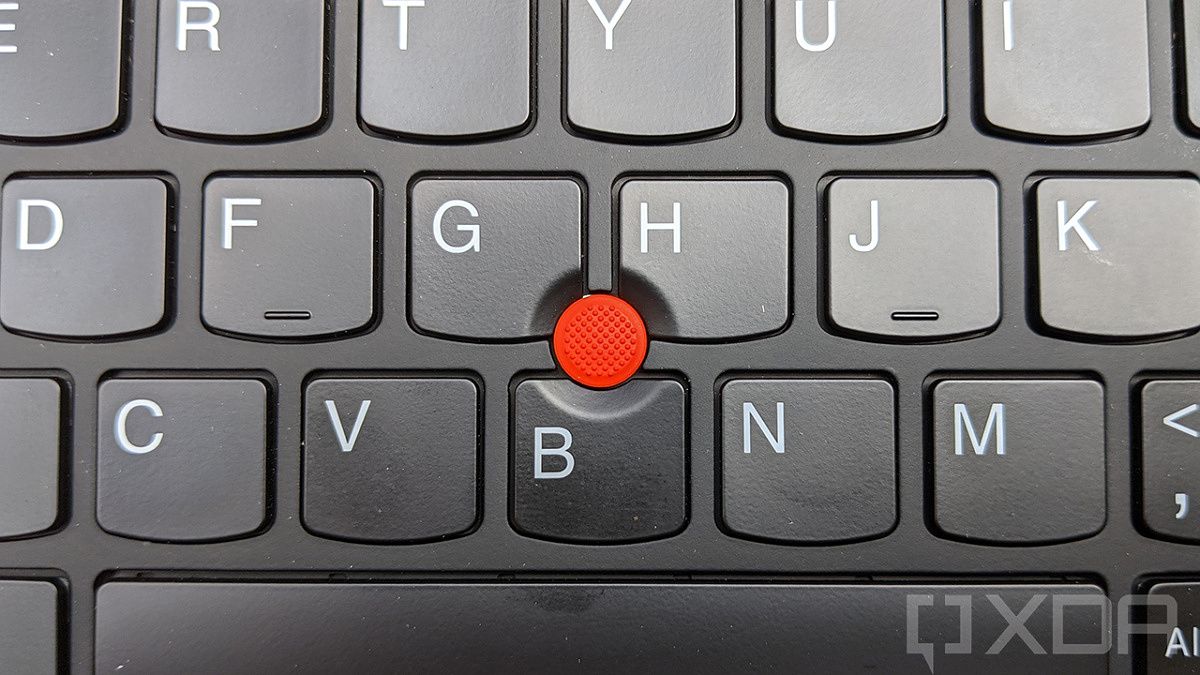
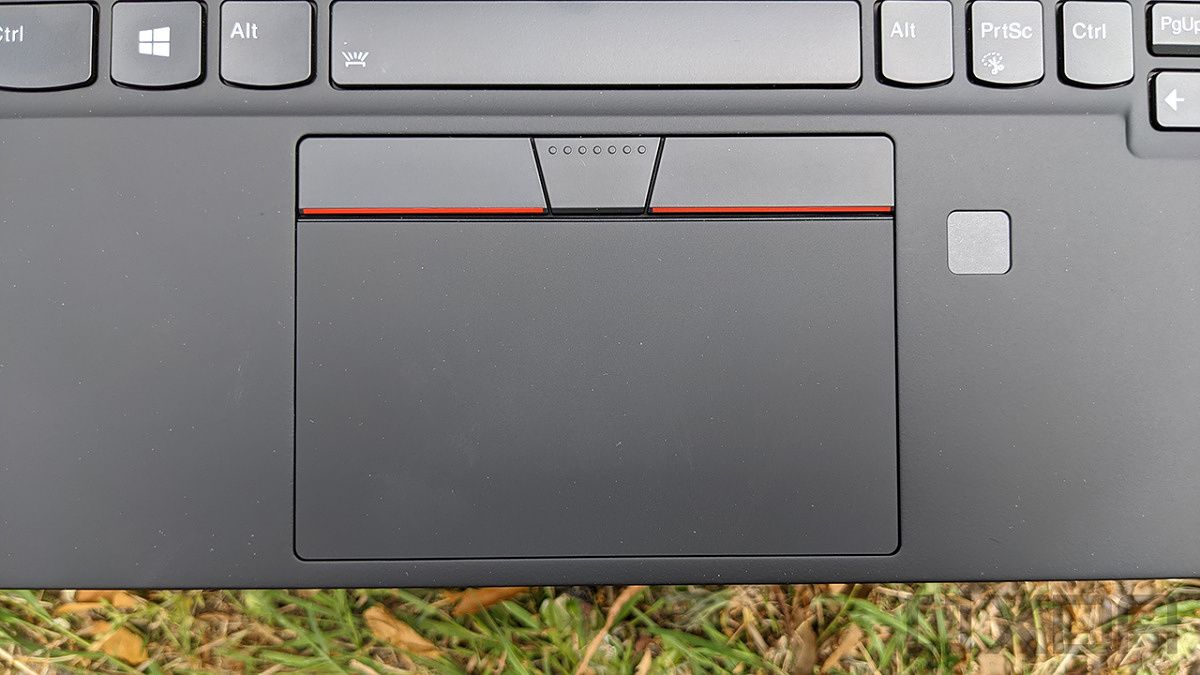
Obviously, the ThinkPad X1 Nano still has the iconic ThinkPad TrackPoint, ie. the little red nub that lets you control the pointer. It’s a relic from the age when Windows touchpads were terrible, but on ThinkPads, it’s just not going anywhere. If you love it, you can use it; if you hate it, just ignore it.
Note that there’s a fingerprint sensor next to the touchpad. That’s something that’s going away at least on some ThinkPads but is still there on the ThinkPad X1 Nano. As I mentioned above, the power button is moving to the keyboard deck with newer ThinkPads where it doubles as a fingerprint sensor. It’s just fascinating to me that this laptop is a brand-new ThinkPad X1 from the ground up, but it’s still missing some of the features that shipped just a month or two later.
Finally, there’s the Microsoft Precision touchpad, which has physical buttons above it. I like the physical buttons — it makes dragging and dropping easier. Still, they’re designed for use with the TrackPoint, and since the TrackPoint isn’t going anywhere, neither are those buttons.
Performance: Y-series? Y not?
The ThinkPad X1 Nano that Lenovo sent me has an Intel Core i7-1160G7 and 16GB RAM, the exact same specs as the first unit the company sent me. The processor is from the Tiger Lake UP4 family.
UP4 is the successor to the Y-series, and even before that, it was known as Core M. I know; I’m throwing around a lot of bad words here. But just because I’m saying things like “Y-series” and “Core M”, don’t run away just yet. These Intel CPUs are actually good.
Compared to the eighth-generation ‘Amber Lake’ (10th-gen ‘Ice Lake’ barely even shipped), there are some major differences. The TDP has been boosted, there are four cores instead of two, and the graphics are much, much better. Now, we’ve got Iris Xe graphics, which are clocked at 1.1GHz and have 96 execution units. Honestly, the integrated graphics on the eighth-gen Y-series were a joke.
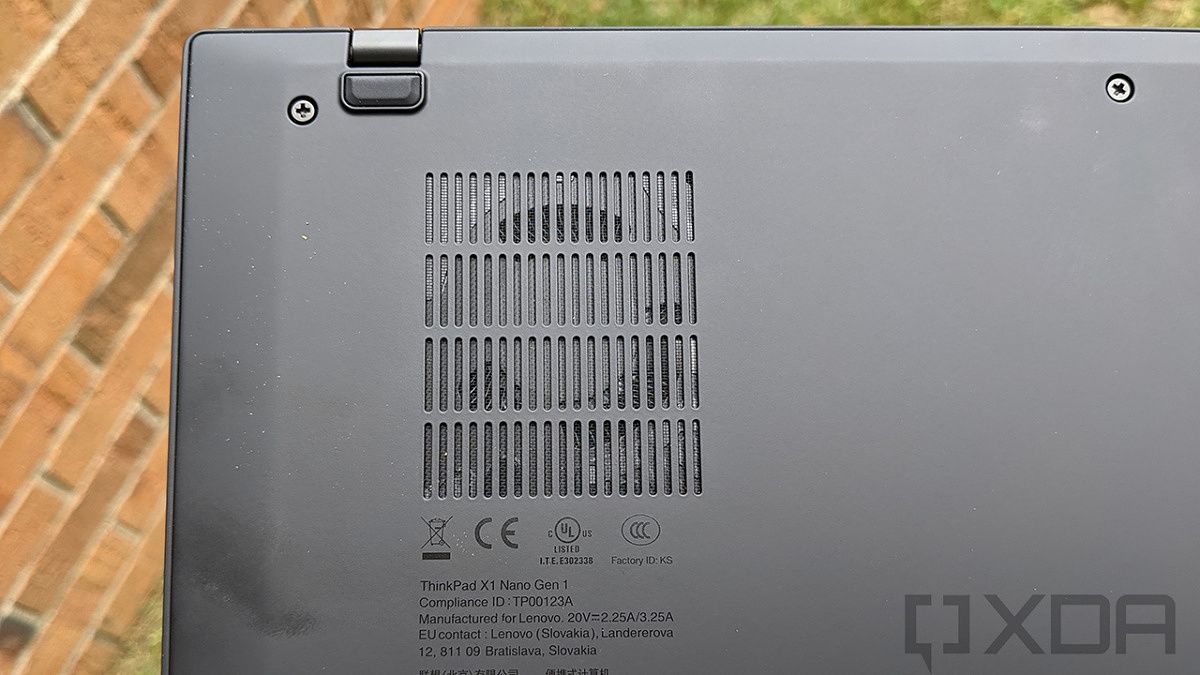
Y-series was designed for fan-less PCs, and yes, the Lenovo ThinkPad X1 Nano does have a fan. But the fact that Tiger Lake UP4 is so good is why this PC can exist. In fact, the same goes for the ThinkPad X1 Titanium Yoga. If this laptop came out two years ago, I wouldn’t recommend it in a million years. In case you missed the badge in the beginning, though, I think the ThinkPad X1 Nano is a top pick.
With Tiger Lake UP4, it seems like there are no meaningful compromises left.
The Intel Core i7-1160G7 is great for productivity, but it can do more than that too. You won’t have any issues with editing images in Photoshop, and you can even do some light video editing on here. As far as performance goes, if you didn’t know that it was a Y-series successor, you wouldn’t even guess that it’s not a regular 15W U-series chip.
Battery life is fantastic too, like weirdly fantastic. I was able to get a solid 10 hours of usage out of this thing. That’s with the power slider one notch above battery saver and screen brightness at 25%. It’s so weird because the battery is only 48WHr, so it’s not particularly large. It’s just really good.
Battery life is fantastic too, like weirdly fantastic.
For benchmarks, I used PCMark 8, PCMark 10, Geekbench 5, and Cinebench.
Conclusion: Should you buy the Lenovo ThinkPad X1 Nano?
The point that I keep coming back to, and the reason that I love the ThinkPad X1 Nano so much, is because just a year ago, this combination simply wasn’t possible. Up until this year, if you wanted a laptop this thin and light, you had two choices: You had to settle for an Intel Y-series processor or a Qualcomm Snapdragon processor. Both have compromises. With Tiger Lake UP4, it seems like there are no meaningful compromises left.
Sure, I would bet that for a business PC, many will say that the lack of USB Type-A and HDMI ports is a compromise. Honestly, though, that’s why the ThinkPad X1 Carbon exists. The Carbon weighs in at under 2.5 pounds, so it’s still really light. With the ThinkPad X1 Nano, though, Lenovo just took things as far as it could go.
There’s one big con though, which is the 720p webcam. Over the last year, many people have moved to work from home, and that’s also caused a boost in PC sales. But if you’re buying a PC because you switched to working from home, you probably want an FHD webcam.
I’d still say that the Lenovo ThinkPad X1 Nano is good for working on the go, though. If you’re looking for something to park at a desk, get a desktop or a beefier laptop. This is something you’ll bring with you, and then when you get home, you can use a single-cable solution to plug it into a Thunderbolt dock.
The ThinkPad X1 Nano is definitely one of my favorite laptops on the market right now, although frankly, all of Lenovo’s ThinkPad X1 laptops are killing it this year.
Like many other retail stores, Walmart sells various tech products and accessories (most of which are ODM designs) under its own “Onn.” brand, alongside products from more well-known brands like Apple, Google, Roku, and so on. The company sells Onn-branded cables, accessories, and even Android tablets, but now Walmart is gearing up to release its own Android TV streaming stick — and it’s really cheap.
Walmart, everyone’s favorite anti-competitive and low-wage retail store, recently created a product listing for the “onn. FHD Streaming Stick” (via Android TV Guide). You can’t buy it yet, but the stick has a retail price of $24.88. If the price doesn’t change before release, it would make the Onn stick one of the least expensive Android TV streaming boxes to date. The Chromecast with Google TV and TiVo Stream 4K are both priced at $50 (though often go on sale for $40), and the Xiaomi Mi TV Stick is currently $40 in the US. Outside of the Android ecosystem, the Roku Express typically goes for around $25.
Onn Stick product listing on Walmart’s website
The product listing doesn’t have a lot of specific details, but it does confirm a maximum resolution of 1080p, Dolby Audio support, 1GB RAM, 2.4GHz and 5GHz Wi-Fi support, and a microUSB port for power. The remote has a Google Assistant button and a microphone for voice commands, as well as dedicated buttons for YouTube, Netflix, Disney+, and HBO Max. There’s also a wall power adapter and HDMI extension cable in the box, in case the HDMI or USB ports on your TV are difficult to access.
It remains to be seen if the stick will work with Amazon Prime Video, which is known to be blocked on many Android TV devices. Netflix also blocks content playback on TV devices that the company hasn’t certified, but the dedicated button for the service on the remote indicates Netflix should be available. Walmart is also preparing to launch a 4K Android TV box, which will cost around $30.
YouTube Vanced is a popular modded version of YouTube. It adds a number of features to the official YouTube app, including built-in adblocking, background playback, black/dark themes, and much more. This page has installation instructions and download links for rooted devices. Non-root downloads can be found here.
In terms of user experience, there is virtually no difference between the root and the non-root builds.
Root variant: The root variant of Vanced seamlessly replaces the official YouTube app. As a result, you can directly open YouTube links or call them using Google assistant through the modded app.
Non-root variant: However, if you have a device that is difficult to root or you don’t want to root your daily driver on the first hand, you should opt for the non-root variant. It can be installed on a rooted device as well. Since the package name of the non-root variant is different from the stock YouTube app, they can co-exist. Note that you need to install an additional companion app (MicroG) to be able to log in with your YouTube/Google account. Moreover, you have to manually set Vanced as the default app for opening YouTube links. However, the non-root variant is simply easier to live with, so our recommendation is to stick with the non-root variant unless you really need to replace the stock YouTube app on your phone.
How to install YouTube Vanced Root variant with Vanced Manager
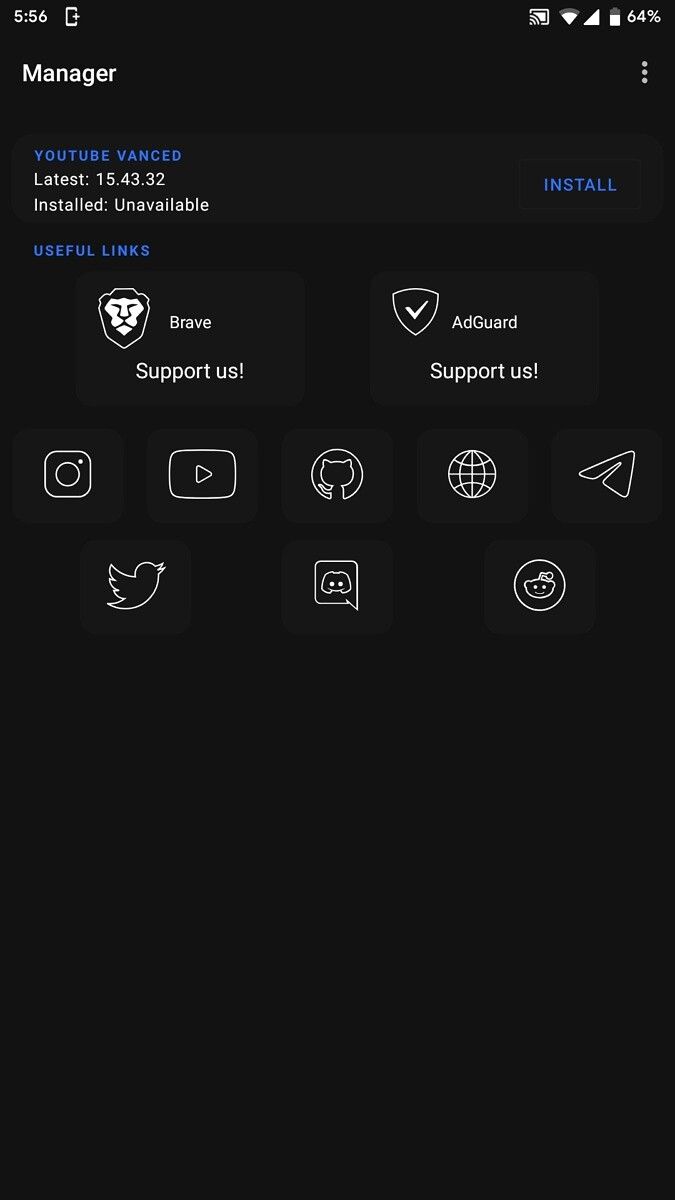
The YouTube Vanced team has created a new, easier method for getting Vanced up and running. Users can now simply install the Vanced Manager app and it will facilitate the process of installing YouTube Vanced. Support for Vanced Music, i.e., a similarly modded version of YouTube Music is also there since version 1.3.0. The app makes it easy to choose which theme you want and to install future updates.
Steps:
Download the latest Vanced Manager from here on your Android device.
Install the app and open it.
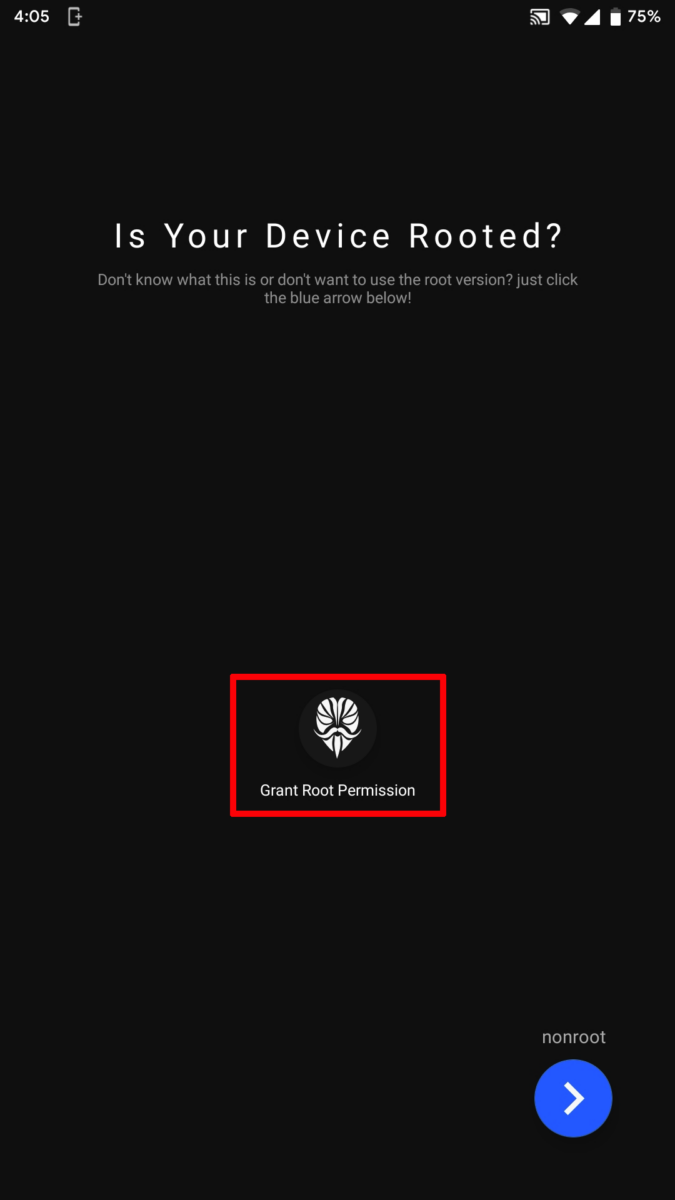
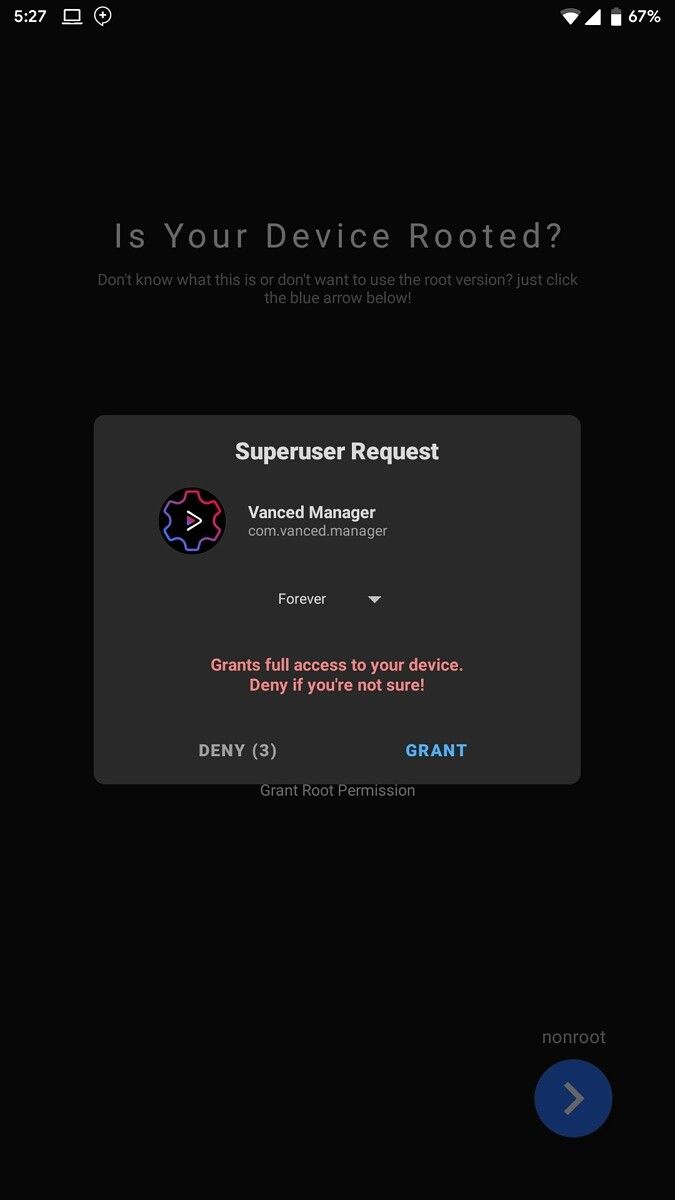
Make sure to grant the app superuser access during the initial configuration wizard.
You will have to disable signature verification in the framework to allow Vanced to install over the official YouTube APK.
At this point, you can tap the “Guide” button to open an external site and follow the guide mentioned therein, to disable signature verification.
You can also use a Magisk Module like Smali Patcher to systemlessly modify the Android framework. Note that you may need to re-create and re-apply the module after installing an official system software update.
Disabling signature verification is highly insecure and not recommended to do. Please exercise your own discretion.
After you’re done with disabling signature verification, simply tap the “Install” buttons and select your theme and language.
While Vanced Manager is always the recommended method for installing and managing the modded YouTube instance, power users may like to have more control over the installation process. In case you want to install this app without using Vanced Manager, you need to follow the steps mentioned below:
How To Install without Vanced Manager
Disable signature verification in the Android framework as mentioned above.
Find the suitable YouTube Vanced APK components for the target device and download them.
AMD announced its Cezanne chips earlier this year, stating that the new APUs under the series will arrive later this year. Today, at its Computex 2021 press conference, AMD CEO Lisa Su announced that the Ryzen 7 5700G and the Ryzen 5 5600G APUs are coming to market for consumers starting August 5, 2021.
The AMD Ryzen 5000G series was first announced in April with a total of three CPU models, out of which AMD is bringing the Ryzen 7 5700G and the Ryzen 5 5600G to retail. This means that the Ryzen 3 5300G will continue to be an OEM-exclusive model. The company had also announced the Ryzen 5000GE series, but it seems that there are no plans of bringing those models to retail at the moment.
Based on the 7nm process, the Ryzen 5000G series is built on the Zen 3 architecture with support for 24 lanes of PCIe 3.0 and DDR4-3200 memory. The Ryzen 7 5700G is an octa-core processor with 16-threads and clock speeds of 3.8GHz with peak turbo speeds of 4.6GHz and a 65W TDP. It also features Radeon Vega graphics with eight compute units running at a clock speed of 2.0GHz. The Ryzen 7 5700G is priced at $350, bridging the gap between the Ryzen 7 5800X and Ryzen 5 5600X.
The Ryzen 5 5600G comes with a six-core configuration with 12-threads, 3.9GHz clock speed, and turbo speeds of 4.4GHz. This one also has a TDP of 65W and Radeon Vega graphics with seven compute units operating at 1.9GHz. Priced at $259, the 5600G is now the most affordable Ryzen 5000 series desktop CPU available for retail. It is worth noting that the 5600G will be an important chip for AMD as it will directly compete with Intel’s Core i5-11600K, which, up until now, didn’t have any solid competition. Customers planning to buy either of the chips will be happy to hear that AMD will be shipping them bundled with the ‘Wraith Stealth’ cooling fan.
Finding the best cheap gaming laptop that fulfills all your needs without burning a hole in your pocket can prove to be a herculean task. With eCommerce portals filled to the brim with a multitude of SKUs from various manufacturers, you can easily spend hours on end looking for the best laptop that packs in the right hardware required for your favorite games. And the process doesn’t end there.
I, for one, make it a point to go through a couple of reviews for each shortlisted notebook before opening my wallet, which adds another few hours to the process. And for someone who isn’t keeping track of the latest developments in the gaming laptop space, those hours can quickly turn into days. If you don’t want to bother with any of this, then you’re in the right place. Here are our top picks for the best cheap gaming laptops (under $1,000) that you can buy right now!
Navigate this guide to the best cheap gaming laptops:
Powered by AMD’s Ryzen 5 4600H processor, the Lenovo Legion 5 is the most well-rounded affordable gaming laptop in the market right now. Priced slightly over $1,000, the laptop packs in Nvidia’s GeForce GTX 1660 Ti graphics card, 16GB of DDR4 RAM, and a 512GB M.2 NVMe SSD. The Lenovo Legion 5 features a 15.6-inch full HD (1920 x 1080) 120Hz high refresh rate display with minimal bezels on three sides.
includes a full-sized keyboard with RGB backlighting and a layout similar to current-gen Thinkpads for a great typing experience. And it has a large offset trackpad that supports Windows Precision drivers for accurate tracking and smooth multi-finger gestures. The Lenovo Legion 5 packs in a respectable 60Wh battery, a substantial array of I/O ports, a beefy cooling system, and a couple of useful software from Lenovo that will help you push the laptop to its limits while gaming.
Speaking of which, the laptop can comfortably run older AAA titles like GTA V and Witcher 3 at well over 60 FPS on average with all the graphics settings maxed out, while newer AAA titles like Metro Exodus and Borderlands 3 run at around 50 FPS on average at high graphics settings.
If your workload involves CPU-intensive tasks, you can also consider getting the Ryzen 7 4800H SKU of the Lenovo Legion 5. For just $100 extra, the higher-end variant will offer a significant performance boost compared to the model mentioned above, a better 144Hz panel, and an additional 1TB of storage.
The Lenovo Legion 5 is our top pick as it offers the most well-rounded package. It features AMD's Rzen 5 4600H and an NVIDIA GeForce 1660 Ti at an affordable price.
Priced under $800, the Acer Nitro 5 is one of the most affordable gaming laptops that you can get right now without making too many compromises on the performance front. It’s powered by Intel’s 11th-Gen Core i5-11400H processor, coupled with an Nvidia GeForce GTX 1650 GPU, 8GB of DDR4 RAM, and a 256GB M.2 NVMe SSD. Unlike the Lenovo Legion 5, which has a subtle design, the Acer Nitro 5 goes for a stronger gamer aesthetic with angular edges and a loud red/black color scheme. However, Acer has toned down the design in the latest iteration compared to the previous models.
The laptop also includes a 15.6-inch full HD (1920 x 1080) IPS display, but it’s capped at 60Hz. Given its price tag, Acer has made a couple of other compromises on the Nitro 5. Its build quality isn’t as premium as some of the other notebooks in this list, it only comes with 256GB of storage, and it has a smaller 57Wh battery. However, none of these things detract from the laptop’s gaming performance.
The Acer Nitro 5 is capable enough to play older AAA titles like Witcher 3 at an average 61 FPS on high settings, and newer titles like Far Cry New Dawn on high/medium settings at an average 50 FPS. When it comes to eSports titles like League of Legends and Rocket League, the laptop can easily push a consistent 60 FPS at high settings.
As with the Lenovo Legion 5, the Acer Nitro 5 also comes in a more powerful SKU that packs an 11th-Gen Intel Core i7-11800H processor, an NVIDIA RTX 3050Ti GPU, 16GB of RAM, and 512GB of solid-state storage. As you’d expect, the premium model offers significantly better performance than the one mentioned above. So, if you can stretch your budget to $1,100, it’s definitely the better option to go with. Get the Core i7-11800H model of the Acer Nitro 5 by following this link.
The Acer Nitro 5 is the most affordable laptop on this list. Despite its lower price tag, the laptop can easily push 60 frames in most modern AAA titles at media/high settings.
Although all the laptops on this list are more than sufficient for popular eSports titles like League of Legends, CS: GO, Apex Legends, etc., the ASUS ROG Strix G15 is the best pick for all you eSports gamers out there. That’s because the laptop packs a 144Hz high refresh rate display, which will definitely give you a slight edge while you’re clicking heads or when you’re in the middle of a massive mid-lane team fight.
Along with the high refresh rate display, the ROG Strix G16 packs Intel’s 10th Gen Core i7-10750H processor, an NVIDIA GeForce GTX 1650 Ti GPU, 8GB of RAM, and 512GB of solid-state storage. Though its hardware configuration isn’t as impressive as some of the other laptops mentioned here, it’s sufficient enough to push 144 frames in the games mentioned above and a consistent 60 frames in AAA titles at medium/high settings.
The only downside of getting the ROG Strix G15 over the other models in this list is that it offers only 8GB of RAM. But you can easily upgrade that after making the purchase. I would recommend taking that route instead of purchasing the 16GB RAM SKU, as you’ll have to pay close to a $200 premium just for an additional 8GB of RAM. In contrast, an 8GB stick of DDR4 memory will set you back around $50.
Other noteworthy features offered by the ROG Strix G15 include a TKL backlit keyboard with dedicated media controls, RGB all around, three USB 3.0 Type-A ports, one USB 3.0 Type-C port, an RJ45 Ethernet port, a headphone/microphone combo jack, and an HDMI port. The newer 16GB model linked above offers USB 3.2 ports instead of USB 3.0 and Wi-Fi 6 support.
The ASUS ROG Strix G15 is the best budget laptop for all you eSports fans out there, as it packs an impressive 144Hz high refresh display that will greatly enhance your gaming experience.
Do you want to experience the latest AAA games with ray tracing without breaking the bank? The new HP Victus 16 is the answer to your prayers. The laptop features NVIDIA’s new budget-friendly RTX 3050 GPU, which offers ray tracing and DLSS support well under $1,000.
The laptop is part of a new gaming laptop lineup from HP that offers gamers wider choice in the budget gaming laptop space. It packs Intel’s new 11th Gen Core i5-11400H processor, an RTX 3050 GPU, 8GB of RAM, and a 256GB SSD. The laptop features a 16.1-inch full HD display, Wi-Fi 6 support, three USB 3.0 Type-A ports, a USB 3.0 Type-C port, an RJ 45 Ethernet port, and an HDMI port. It even features a dual speaker setup tuned by B&O, which offers an immersive gaming experience.
Performance-wise, you can expect the HP Victus 16 to comfortably deliver 60 FPS in most modern AAA games and well over 60 FPS on eSports titles. Sadly, the laptop isn’t as feature-packed as some of the other models mentioned here and you’ll have to tone down your expectations if you want an NVIDIA RTX GPU in this price range. For instance, you won’t get per-key RGB with the Victus 16 and the laptop won’t feel as premium as an HP Omen notebook. But you’ll have to make these compromises if you want to experience ray tracing on an affordable gaming laptop.
The Dell G5 features an AMD Ryzen 7 4800H processor and a Radeon RX 5600M GPU, which makes it the best cheap gaming laptop for all you team red fans out there. Priced at around $900, the Dell G5 is one of the most affordable laptops on this list and it offers impressive performance, decent battery life, an understated design, and a great selection of ports.
The CPU and GPU on this particular variant of the Dell G5 are paired with 8GB of RAM and a 512GB SSD, a 15.6-inch full HD 144Hz display, and Wi-Fi 6 support. The laptop is backed by a 51Wh battery, which should easily last you 8 hours of nominal use on a single charge.
The all-AMD Dell G5 doesn’t disappoint in terms of performance, as it manages to run titles like Borderlands 3 and Metro Exodus on medium/high settings at a solid 70 FPS on average. Older AAA titles like Witcher 3 run at well above 90 FPS at medium/high settings, while eSports titles easily cross the 144 FPS mark to help you make the most out of the high refresh rate panel.
The Dell G5 is the perfect pick for all your AMD fans out there, as it's the only model on this list that features an AMD CPU and a Radeon GPU. Despite its affordable price tag, the laptop can easily power through most AAA games at medium/high settings.
The MSI GF63 is the most compact and lightweight budget gaming laptop on this list, making it the perfect choice for those looking for a portable gaming laptop. Although it features a 15.6-inch FHD display like most of the other laptops on this list, it has a smaller form factor thanks to the slim bezels around the display.
Despite its smaller footprint, the laptop packs a 10th Gen Intel Core i5-10200H processor, an NVIDIA GTX 1650 GPU, 8GB of RAM, and a 256GB SSD. It has a fair selection of I/O ports, a decent 51Wh battery, and easily accessible RAM/storage slots for future upgrades.
On the performance front, the MSI GF63 isn’t a slouch either. While it may not offer the best performance out of the lot, it manages to puch an average of 60FPS on older AAA titles like Witcher 3 at medium/high settings. Newer titles like Far Cry New Dawn and Borderlands 3 run at around 50 FPS at medium/high settings.
If you're on the lookout for a portable gaming laptop in the price range, the MSI GF63 is your best bet. It's thinner and lighter than most other laptops on this list, yet it still offers decent performance in older AAA and eSports titles.
Although the Lenovo Legion 5 is our top pick due to its overall configuration, if I had to buy a gaming laptop right now, I would go with the HP Victus 16, solely because it’s the only one that packs an NVIDIA RTX GPU under the $1,000 price bracket. However, if I had a couple of hundred dollars extra, I would pick the higher-end Acer Nitro 5 SKU, as it packs both a better processor and an RTX 3050Ti GPU. It’s worth noting that several OEMs have announced new RTX 3050 and RTX 3050Ti-powered laptops recently, which are expected to hit the market later this year. So, if you’re not in a hurry, you might want to wait for the newer models with the RTX GPUs.